An Employer Identification Number (EIN) is a unique nine-digit number, written in the format 12-3456789, that the Internal Revenue Service (IRS) issues to identify a business for United States federal tax purposes. If you are forming a company, hiring staff, or opening a US business bank account, an EIN is usually one of the first items on your checklist.
This guide explains, in plain terms, what an EIN is, who needs one, and the main ways to apply. For applicants based outside the United States, the process carries a few extra wrinkles that are worth understanding before you begin. You can read more about our Employer Identification Number (EIN) service for the full picture.
What is an EIN?
An EIN, also called a Federal Tax Identification Number, works as the tax ID for a business in much the same way a Social Security Number (SSN) identifies an individual. The IRS uses it to track a company’s federal filings, payroll, and reporting obligations. Once issued, an EIN belongs to that entity for the life of the business and is rarely cancelled or reassigned.
Who needs an EIN?
In most cases you will need an EIN if you:
- Form a corporation, partnership, or multi-member LLC
- Hire employees or operate US payroll
- Administer a trust, estate, or non-profit organisation
- Run a foreign-owned US business or hold US assets through an entity
- Open a US business bank account, which almost always requires an EIN
Even single-member LLC owners frequently apply for an EIN so they do not have to share a personal SSN with banks, payment processors, and vendors.
How to apply for an EIN
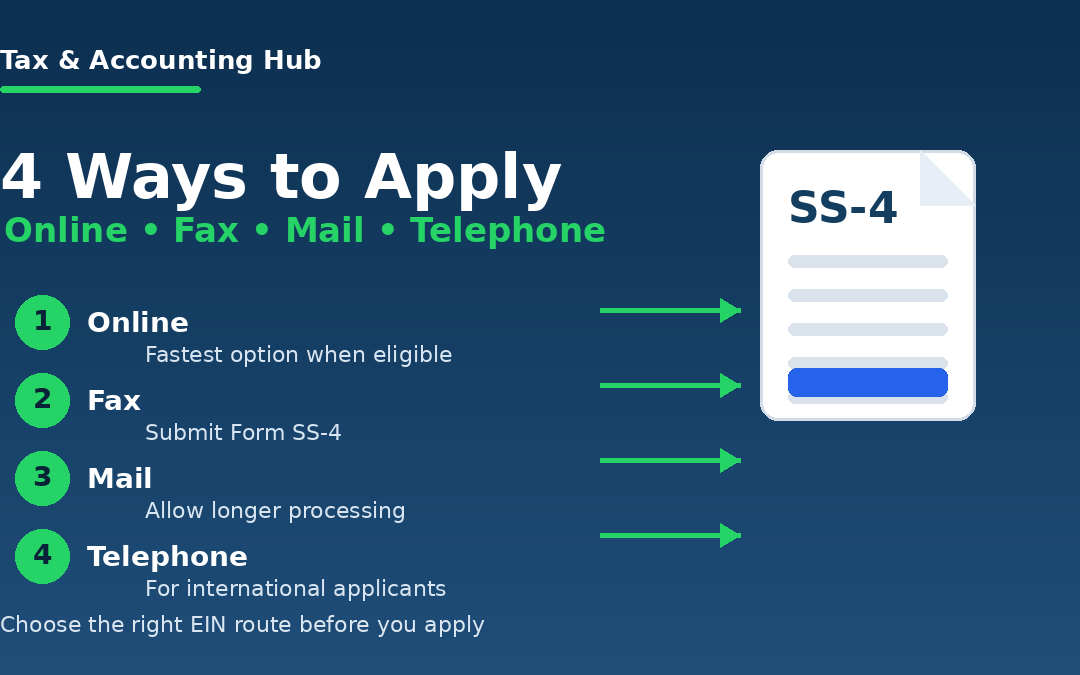
The IRS offers four routes. The right one depends mainly on whether you, the “responsible party,” hold a US taxpayer identification number, and on where the business is based.
- Online – the fastest option, with the number issued immediately. This is available only when the responsible party has an SSN, ITIN, or existing EIN and the business has a US address.
- Fax – submit a completed Form SS-4; a reply usually follows within a few business days when you include a return fax number.
- Mail – post a completed Form SS-4 to the IRS, generally allowing around four weeks for the number to arrive.
- Telephone – reserved for international applicants who have no US residence or place of business. The IRS can assign the EIN during the call.
We have deliberately kept the field-by-field walkthrough of Form SS-4 out of this overview. Small entries on that form, particularly the entity type and the responsible-party section, are a common cause of delays and outright rejections, and the correct answers differ from one business structure to the next.
Applying without an SSN, or from outside the US
This is where many applicants get stuck. If you do not hold an SSN, the online system is closed to you, and the application has to go through one of the alternative methods above. The responsible party must still be a named individual, and how the form is completed depends on whether that person already holds an ITIN.
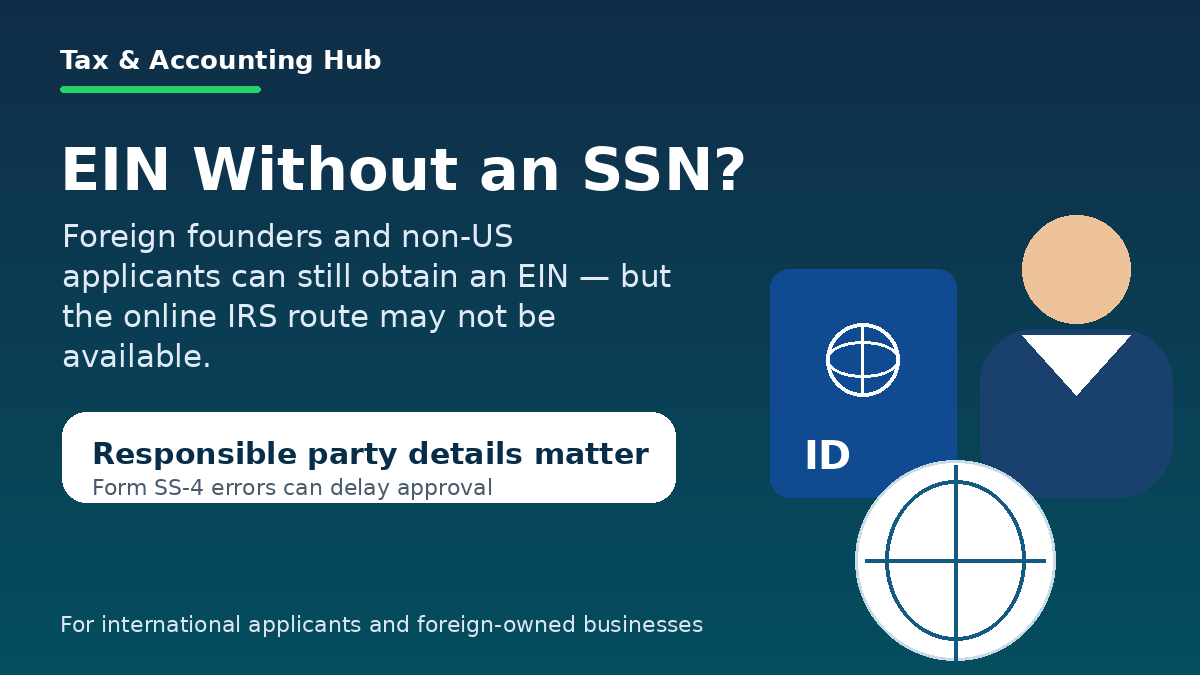
Foreign founders, investors, and landlords often need an EIN before they can bank, trade, or report income in the US. Common examples include foreign nationals selling or earning rental income from US property, where the EIN sits alongside FIRPTA withholding and tax-treaty considerations. Getting the entity classification and responsible-party details right at this stage saves considerable time later.
As an IRS-approved Certified Acceptance Agent (CAA), our team regularly secures EINs for non-US clients and coordinates the related ITIN and US tax filings in one place, which removes much of the back-and-forth with the IRS.
EIN vs ITIN: What is the difference?
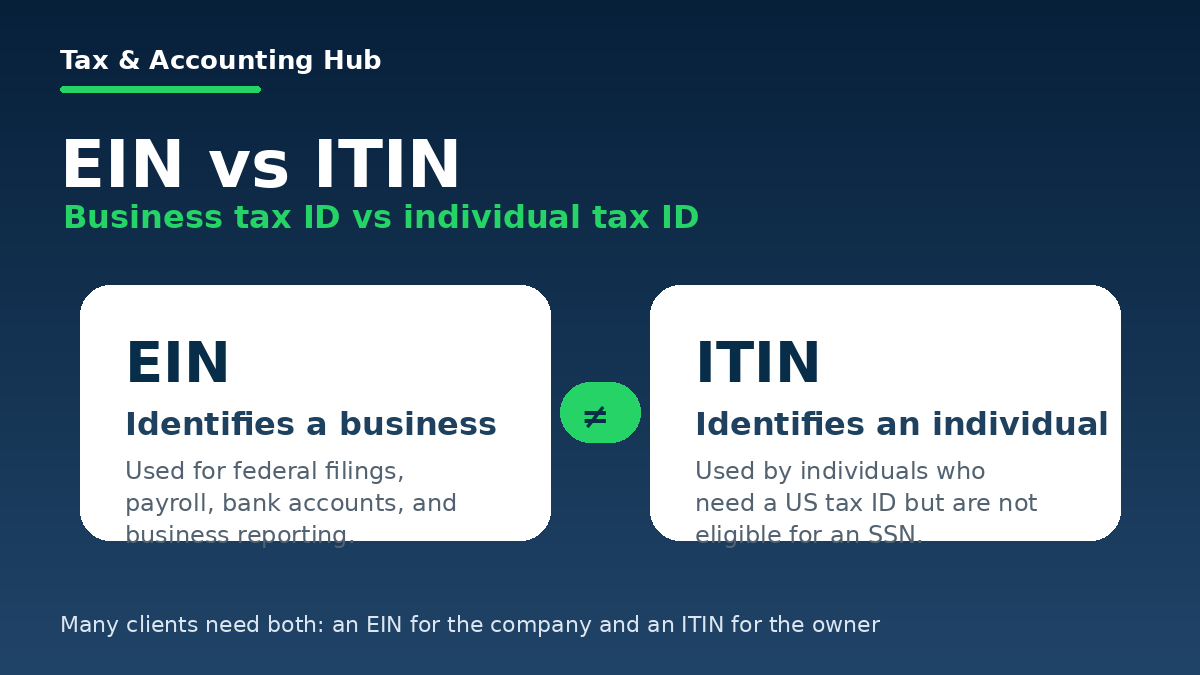
In short, an EIN identifies a business, while an ITIN identifies an individual who is not eligible for an SSN. The two are easy to confuse because both are nine digits and both are issued by the IRS, yet they serve very different purposes. Many of our clients discover they need both: an EIN for the company and an ITIN for the owner who must file a personal return.
Frequently asked questions
How much does an EIN cost?
The IRS does not charge a fee to issue an EIN. Any cost you pay is for professional assistance with the application rather than for the number itself.
How long does it take to get an EIN?
Timing depends on the method. Eligible online applicants receive the number at once, while fax and mail applications take longer. For overseas applicants, timelines vary, which is one reason the route you choose matters.
Do I need to be a US citizen to get an EIN?
No. Non-US citizens and foreign-owned businesses can obtain an EIN. You do not need an SSN, although the absence of one changes which application method is available to you.
Can someone apply for an EIN on my behalf?
Yes. A third-party designee can be authorised to file the application and receive the EIN for you, which is how most of our clients prefer to handle it.
Need help securing your EIN?
Every situation is a little different, and the details that trip people up are rarely obvious from the outside. Our specialists at Tax and Accounting Hub handle EIN, ITIN, and US personal tax matters for clients worldwide. If you would like the application to be managed correctly the first time, get in touch, and we will guide you through it.